


Design your own bird swarm
The fastest way to understand emergent behavior is to change a few local rules and watch the whole flock respond. Use Murmuration Studio to explore how small adjustments to separation, alignment, cohesion, movement, and depth create dramatically different collective behavior.
Try building your own murmuration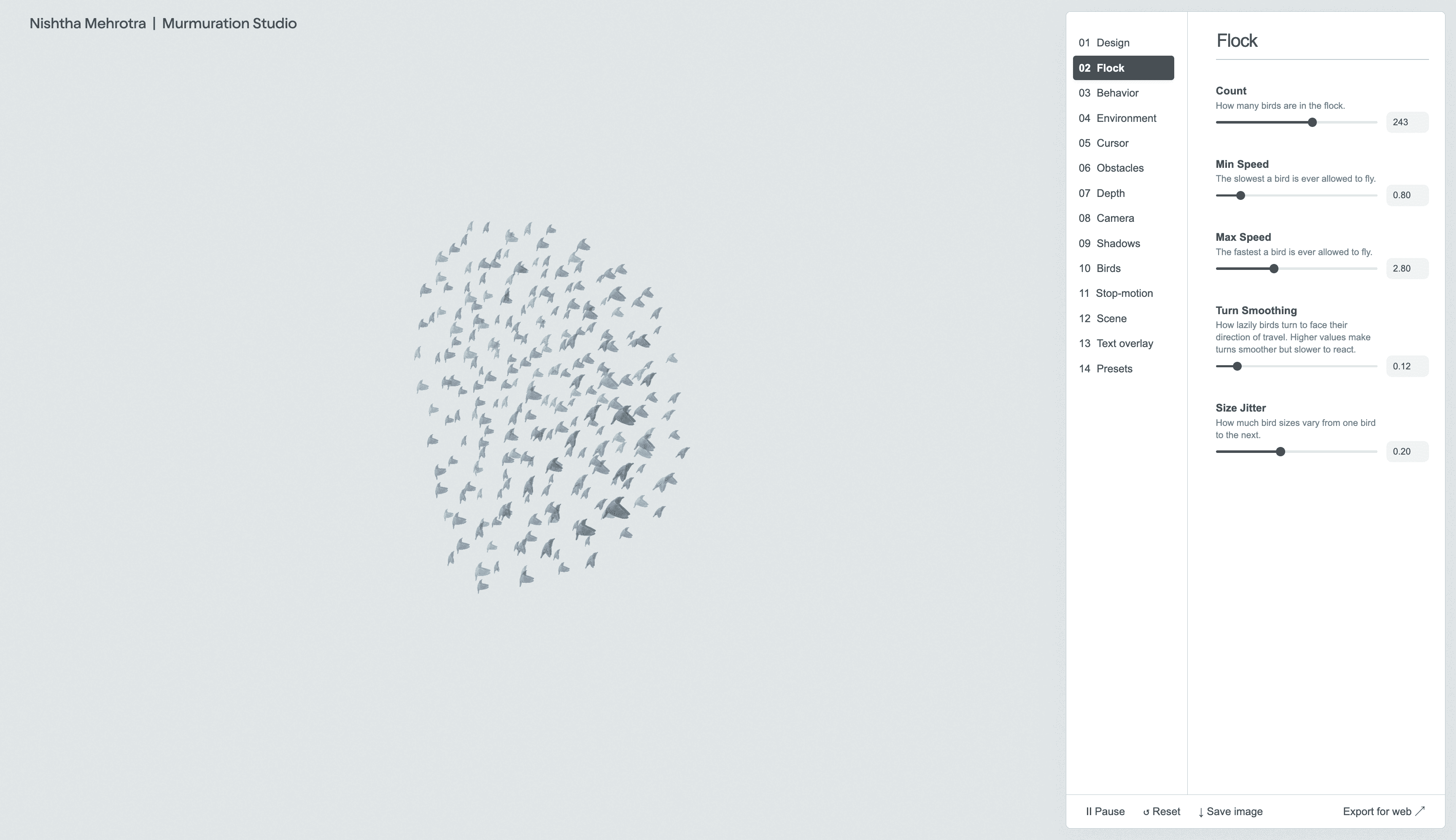
Why a flock?
A murmuration is a useful way to think about intelligence without a central brain. Each bird sees only a small part of the world: the birds close to it, the space directly ahead, and any immediate danger. From that partial view, it follows three simple rules:
- Separation: keep enough space to act independently.
- Alignment: pay attention to the direction of nearby birds.
- Cohesion: stay connected to the larger group.
Keep enough space to act independently.
Pay attention to the direction of nearby birds.
Stay connected to the larger group.
No bird sees the whole flock. Each one just follows these three rules, all the time.
The metaphor for agent swarms
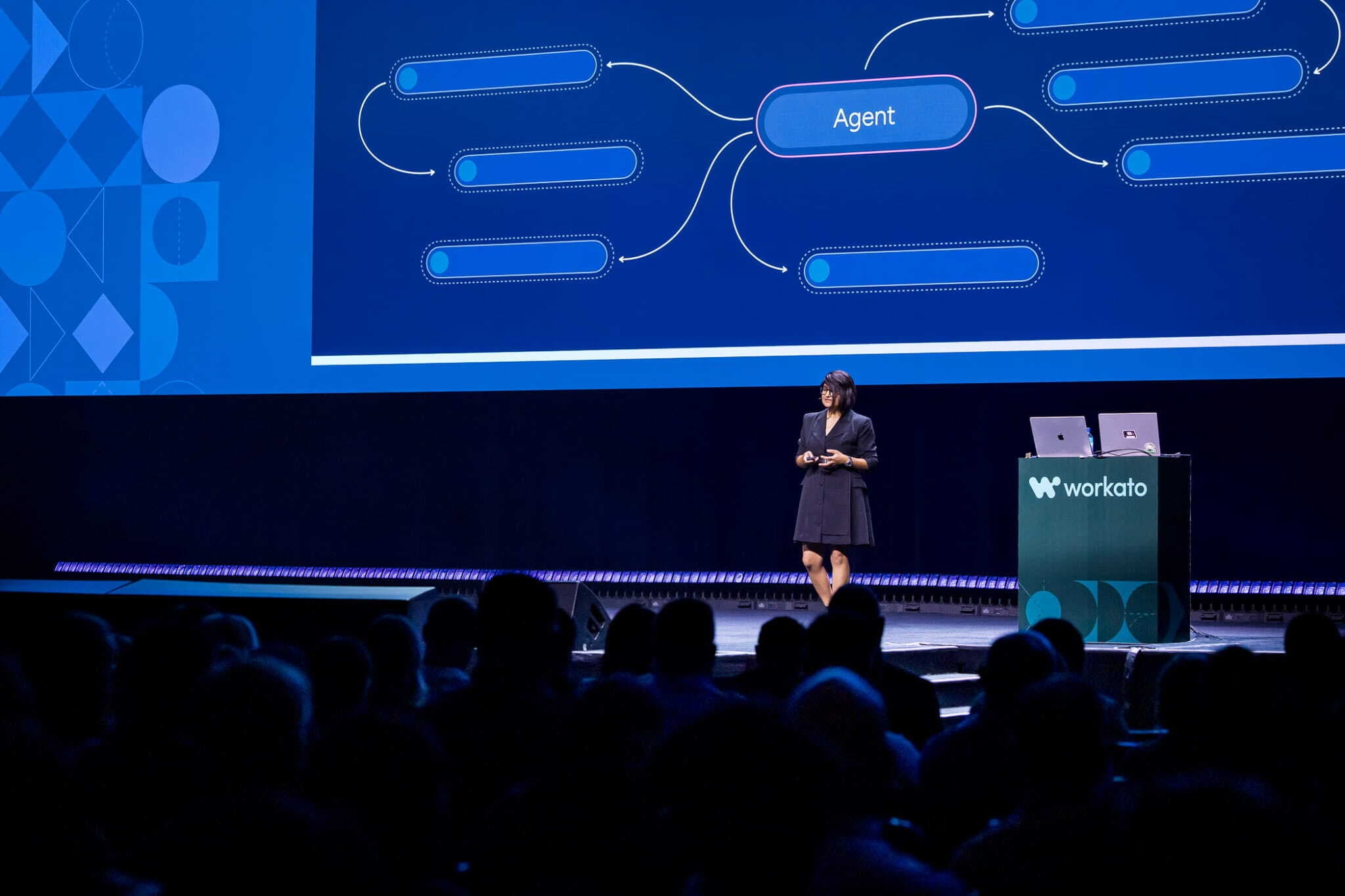
An agent has a limited view, a set of instructions, and the ability to act. Put many agents together and the important question becomes: What happens between them?
| Flock rule | Agent-swarm equivalent | Why it matters |
|---|---|---|
| Separation | Clear ownership | Prevents two agents from overwriting the same work. |
| Alignment | Shared context and goals | Keeps agents moving toward the same outcome. |
| Cohesion | Communication and handoffs | Helps agents ask for support, pass work along, and return results to the group. |
How it was built, in 12 steps
I started with Alex Scott's Canvas murmuration rather than a blank canvas. A working flock let me learn the system by changing it and immediately see which behaviors felt convincing or wrong.
The flock depended on dozens of hidden values, including speed, neighbor distance, wind, fear, camera, and depth. I turned them into live controls so I could change one variable and watch the flock scatter, clump, flow, or recover in real time.
Each bird separates from close neighbors, aligns with nearby directions, and moves toward the local group. I tuned density first, behavior second, and appearance last. Summing separation forces instead of averaging them stopped symmetrical forces from canceling out and collapsing the flock.
Local rules coordinate movement, but they don't provide purpose. I added one to three slow-moving attractors, soft boundaries, wind, and turbulence so the flock had direction without following a scripted path.
The cursor changes the birds' conditions instead of triggering a separate escape animation. Birds flee and recover using their existing rules, with cohesion briefly strengthened after a disturbance. The recovery makes the system feel adaptive.
The site measures the real HTML headline and passes its geometry to the simulation. Birds steer around each line as an obstacle, allowing them to flow close to the words without blocking the empty space beside shorter lines.
The first version moved correctly but felt like paper sliding across a table. Camera depth, scale, opacity, rotation, and draw order made the flock read as a moving sheet while keeping the depth deliberately shallow.
I drew several wing poses and packed them into a sprite atlas. The simulation still updates smoothly, while the artwork changes at a slower frame rate with slight jitter and variation to create a handmade stop-motion quality.
Murmuration Studio is the authoring tool, not the production artifact. Export packages the behavior preset, sprite atlas, manifest, optional sky, fallback, and README separately from the studio so experimentation stays flexible and the website embed stays small.
A small client component mounts the exported bundle and passes the hero text as an obstacle. The embed owns the canvas, physics, camera, pointer events, and render loop, while React only creates and destroys it.
On narrow screens, I reduce bird count and sprite size and proportionally scale the pixel-based physics values. Responsive simulations need responsive rules because a comfortable boundary on a laptop can consume most of a phone screen.
I tested the flock under interruption, resize, tab changes, narrow screens, and reduced-motion settings. Failure patterns helped separate model bugs from rendering bugs, including birds flying backward and shadows rotating in midair.
Reflection
The murmuration is a metaphor. Human-built agents will need more than three rules, and their mistakes carry different consequences. But the flock makes one principle visible: collective intelligence isn't created by multiplying isolated intelligence. It emerges from goals, boundaries, communication, recovery, and the quality of the rules between participants. The future of agents may be decided as much by how they coordinate as by how capable any one of them becomes.