


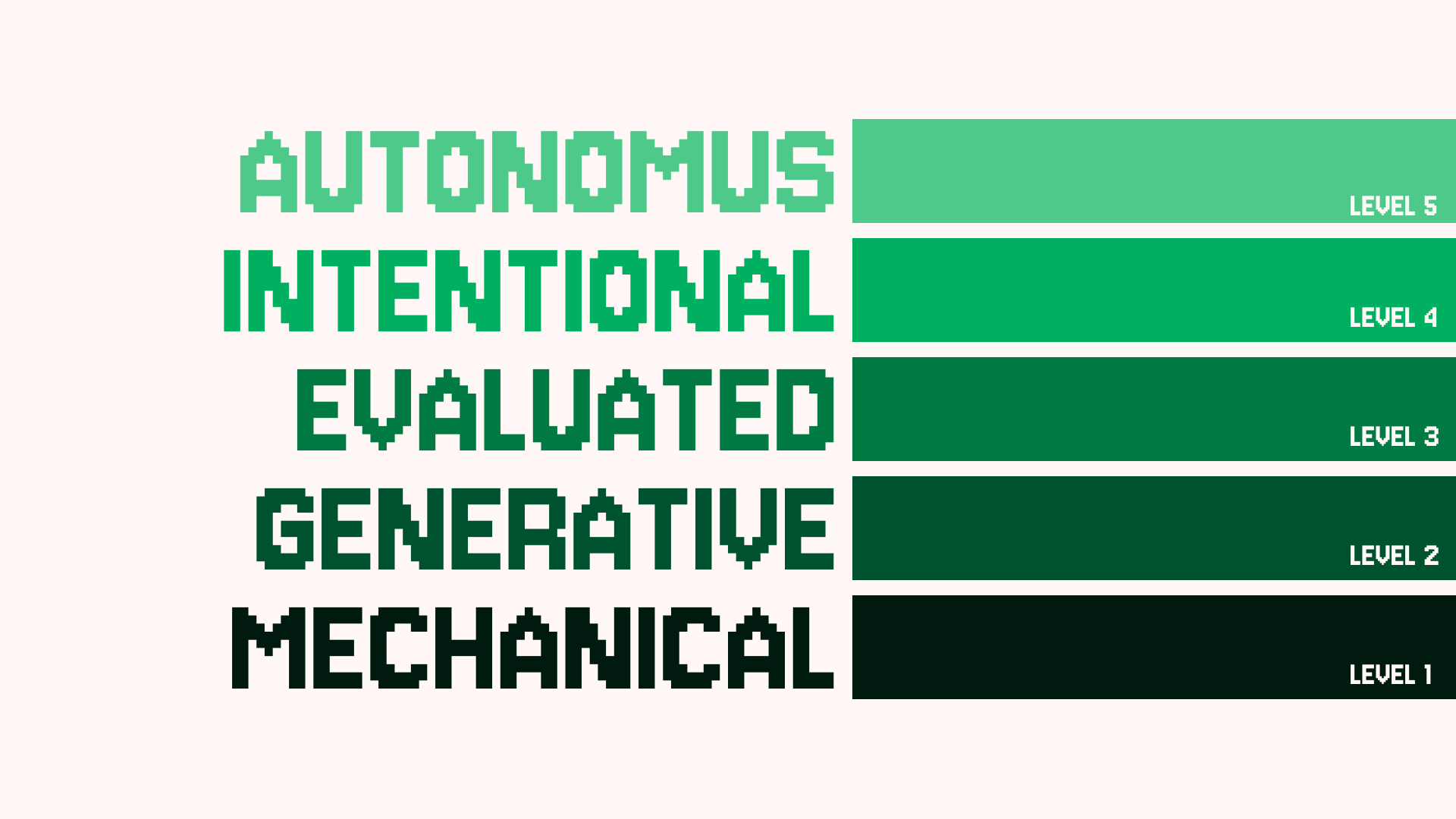
5 levels of AI maturity in design
This five-level model follows AI's role in design from completing bounded production tasks to independently researching, evaluating, and executing a brief. Each level changes what AI can own and where human judgment remains essential.
Level 1: Mechanical
At the mechanical level, AI is a fast pair of hands. It completes bounded tasks with clear instructions and limited product context.
Examples include:
- Writing error messages, button labels, and placeholder copy
- Removing image backgrounds
- Documenting a component
- Creating dark mode or responsive variants
- Summarizing research transcripts
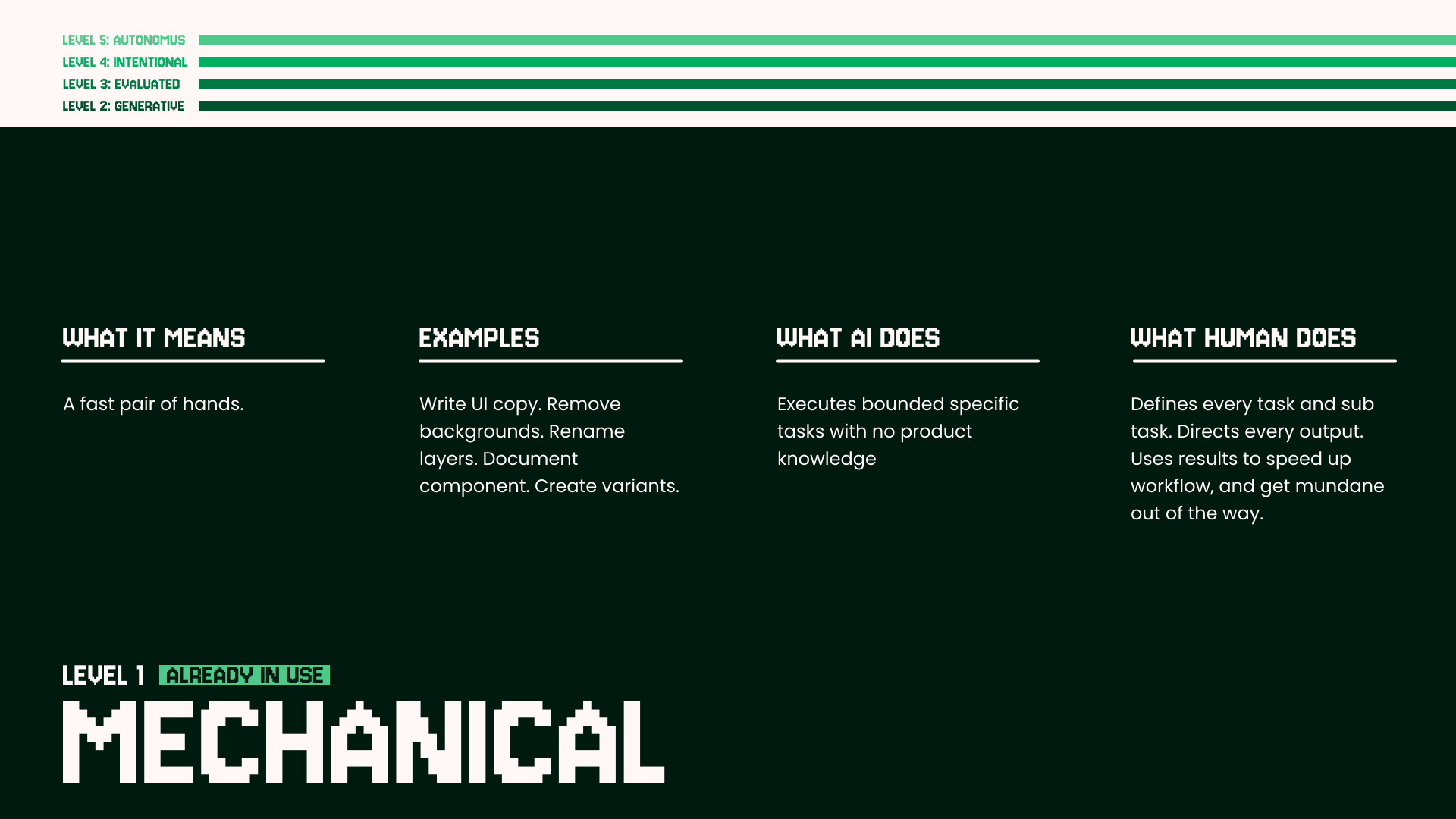
The designer still decides what needs to happen, breaks the work into steps, supplies the context, and reviews every output. AI speeds up the workflow while leaving its structure unchanged.
Level 2: Generative
At the generative level, AI receives a problem and produces a landscape of possible directions. For an interface that manages multiple agents, it might research comparable patterns, explain tradeoffs, and prototype four interaction models:
- A mission-control dashboard showing every active agent
- A dock for switching between agents
- A spotlight-style command interface
- An inbox that organizes requests, updates, and approvals
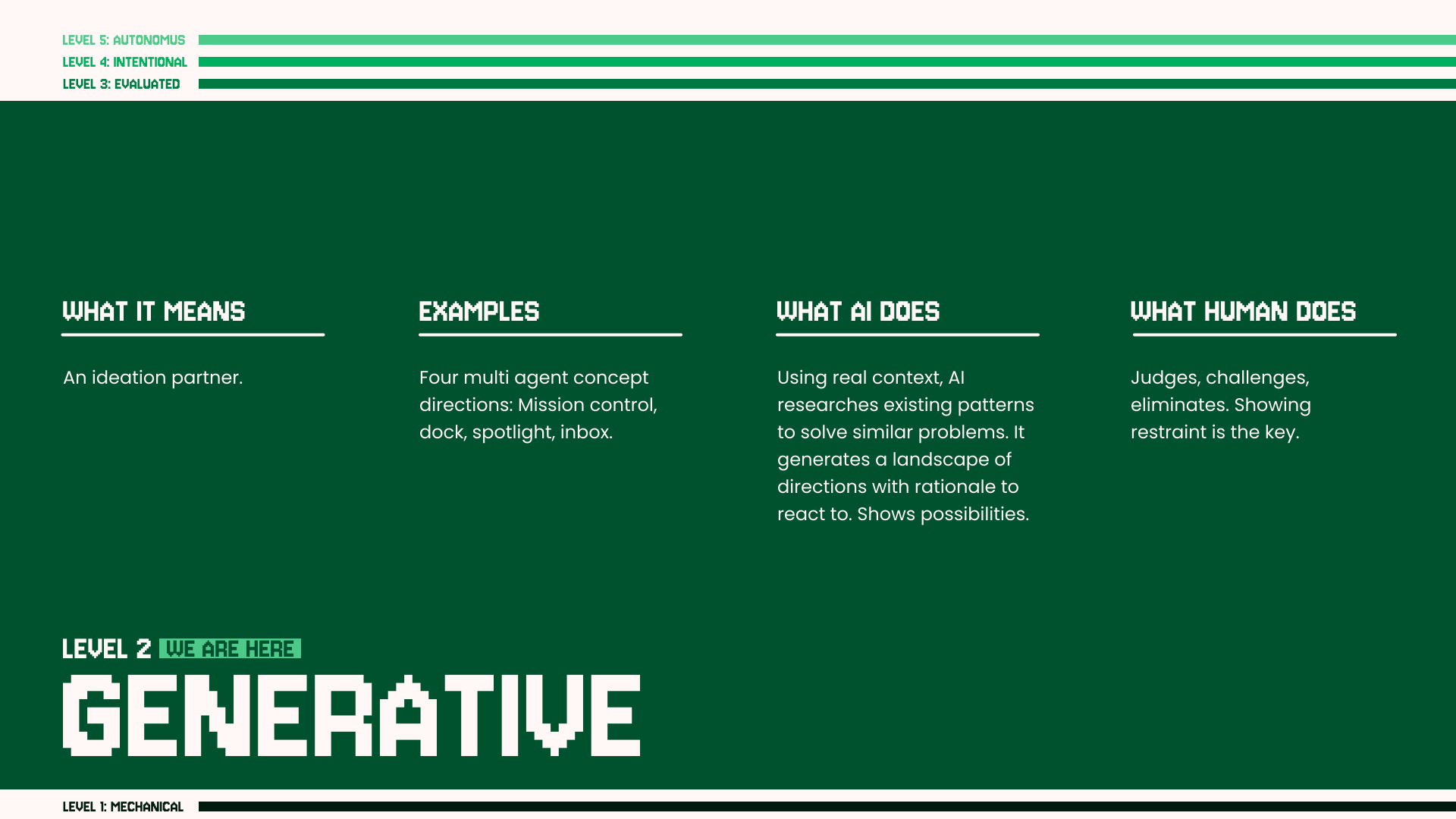
The designer supplies the problem, constraints, customer context, and product goals. AI expands the solution space.
Level 3: Evaluated
At the evaluated level, AI generates directions, gathers evidence, and challenges early assumptions. In a study about managing multiple agents, it might notice that participants treat the agent as a command executor even when the product presents it as a collaborator, then propose several responses:
- Change the study to investigate expectations of agency and control
- Test language that makes collaboration more explicit
- Compare a conversational interface with a task-management interface
- Introduce moments where the agent asks for clarification
- Examine whether users want collaboration at all
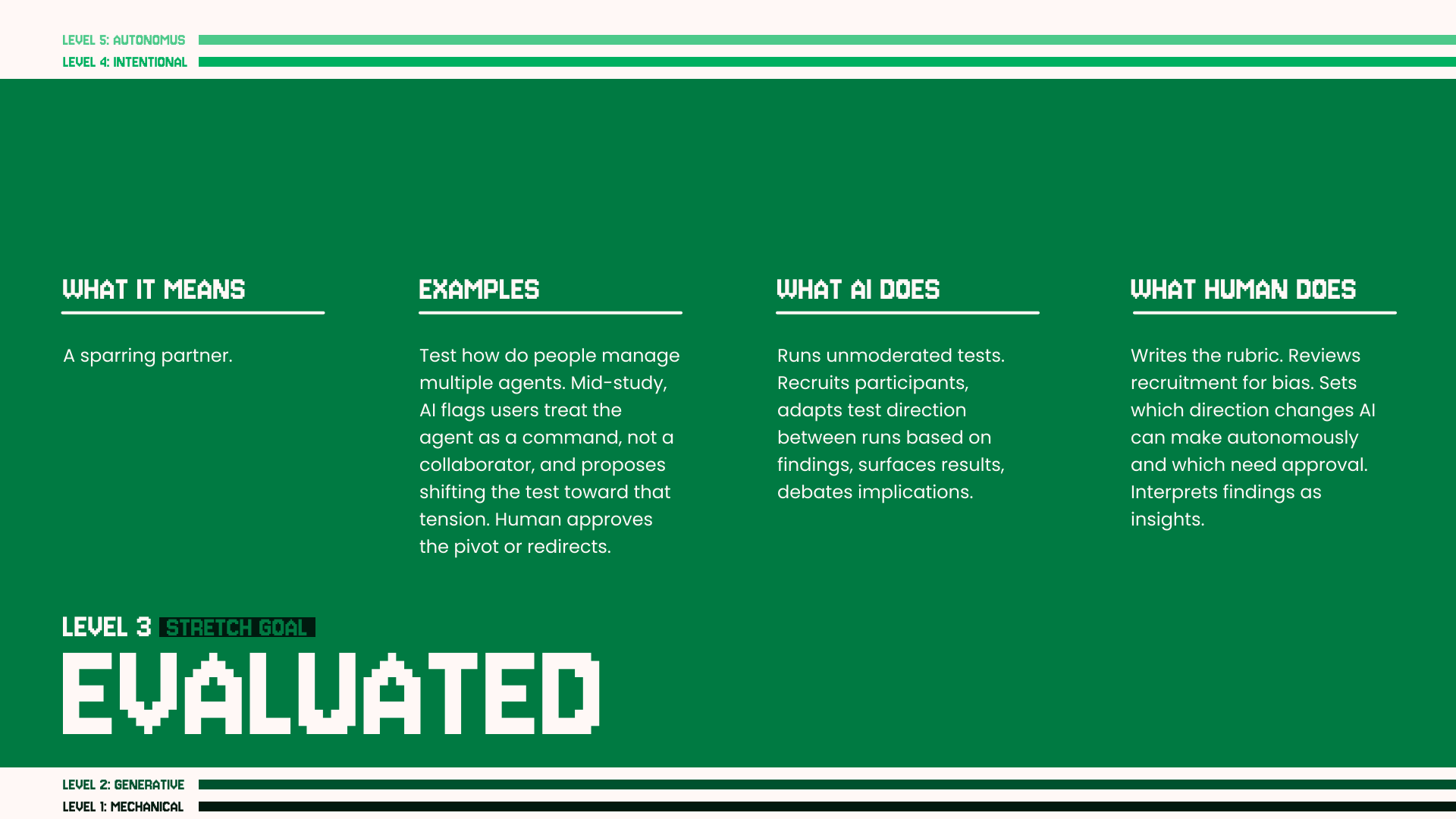
Level 3 requires an explicit evaluation system. The team defines success, evidence, recruitment, and the decisions AI may make during a study. A designer or researcher interprets the findings and decides whether the work should change direction.
Level 4: Intentional
At the intentional level, AI can execute toward a specific experiential quality.
This level concerns the details that shape how a product feels:
- The difference between optical and mathematical corner radii
- The speed and curve of an animation
- The rhythm of a multi-step interaction
- The amount of friction before a consequential action
- The tone of an interruption
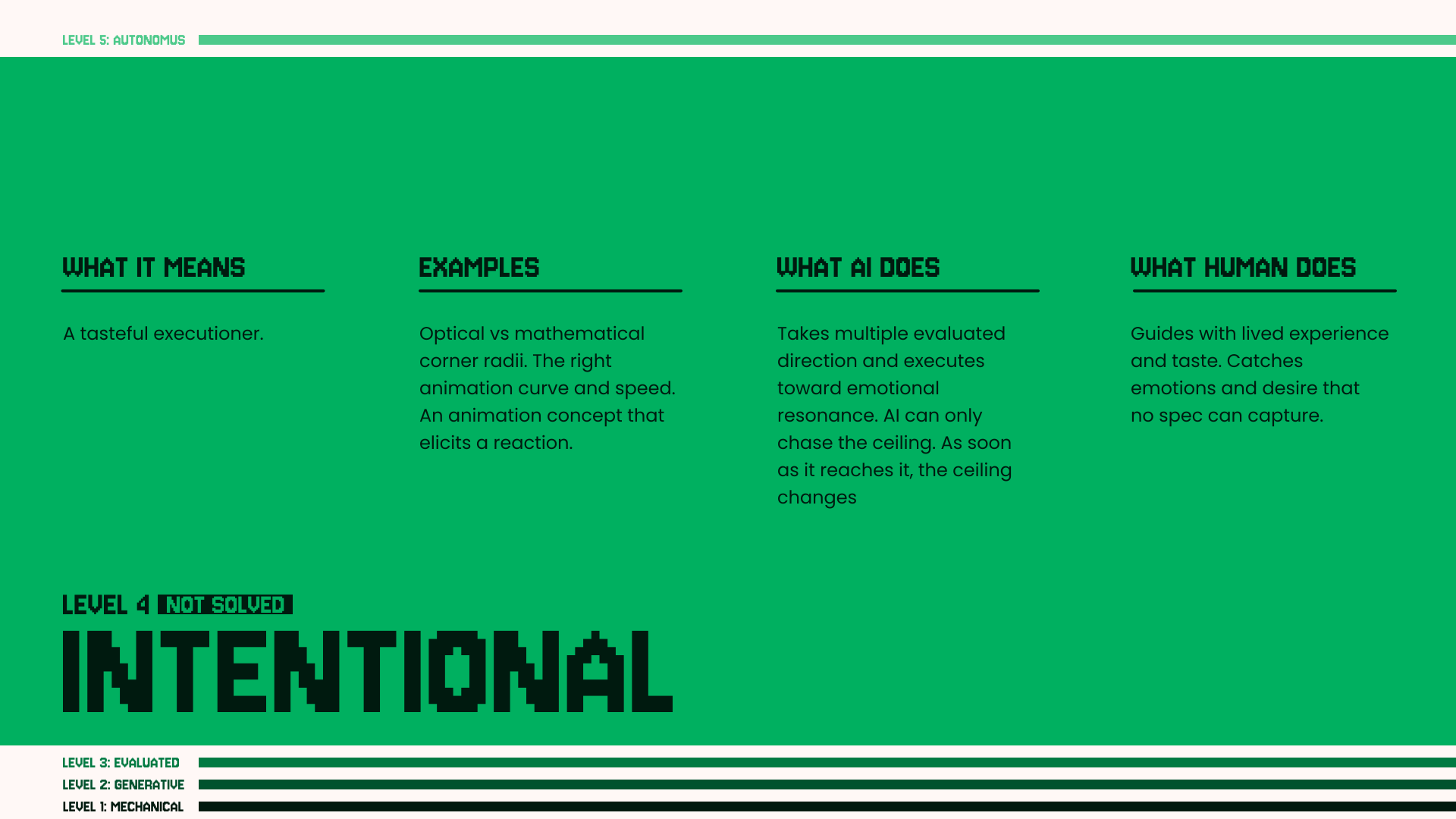
A team may want an approval interaction to feel deliberate without feeling slow, or a healthcare alert to feel urgent without creating panic. AI can generate, test, and refine several executions, but qualities such as “calm,” “confident,” or “playful” still allow many technically valid interpretations.
The designer guides AI using references, critiques, customer knowledge, lived experience, and taste. AI can already produce polished work, but consistently creating the right emotional effect across an experience requires an evolving sense of what good looks and feels like.
Level 5: Autonomous
At the autonomous level, AI operates as an independent designer across the full process.
A designer or product lead might write:
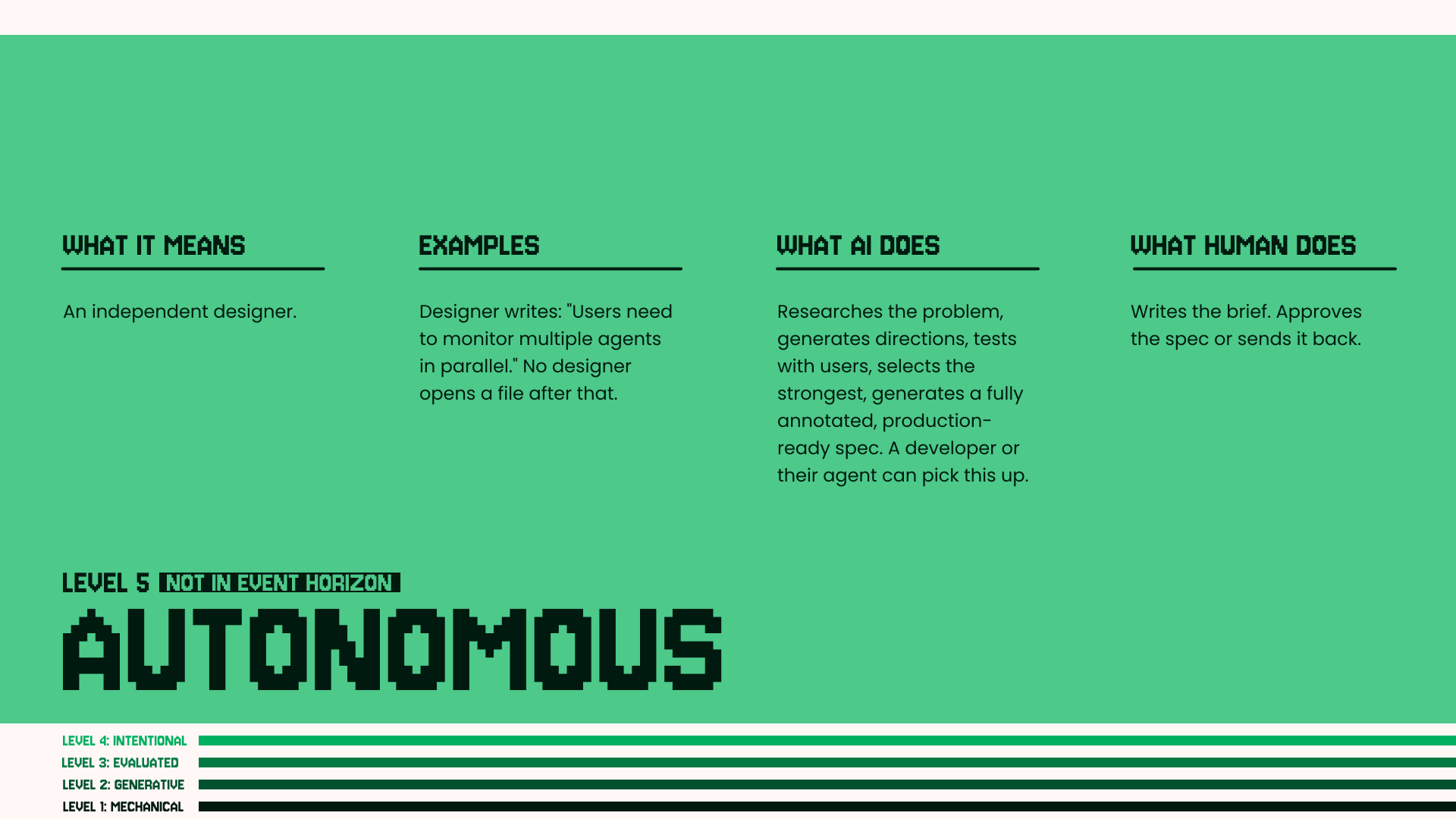
From that brief, AI would:
- Research users and their current workflows.
- Review existing product patterns and technical constraints.
- Identify the problem and generate several product directions.
- Build prototypes, recruit participants, and run studies.
- Revise or eliminate weak directions.
- Select the strongest solution.
- Produce an annotated, production-ready specification.
Level 5 requires every preceding capability to work together reliably, from research and evaluation through interaction design, accessibility, edge cases, and documentation.
Using the model
A team can operate at several levels at once. AI might handle production tasks at Level 1, concept exploration at Level 2, and a narrowly defined research program at Level 3.
The model is useful because it makes each working relationship concrete. For any AI-assisted design activity, teams can ask:
- What context does AI receive?
- What work can it complete independently?
- How is the output evaluated?
- Which decisions require approval?
- What evidence supports the final direction?
- Who owns the outcome?